
By bestdealss Newsroom | September 13, 2025
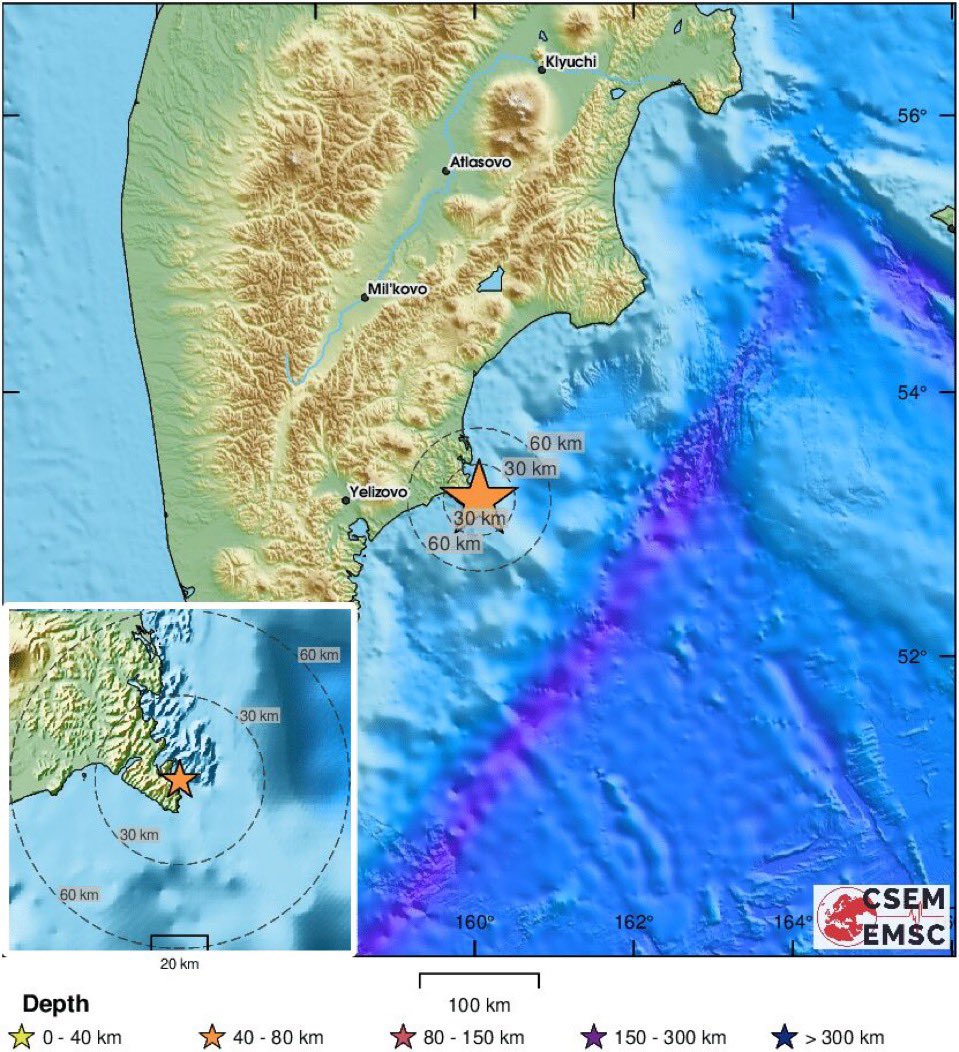
In the early hours of this morning, the rugged Kamchatka Peninsula in Russia’s Far East was rocked by a formidable 7.4-magnitude earthquake, centered 110 kilometers east of Petropavlovsk-Kamchatsky. Striking at approximately 2:37 a.m. local time, the quake sent tremors through the region’s volcanic landscapes, stirring memories of the catastrophic 8.8-magnitude megathrust event that devastated the area in late July. As the ground continues to rumble with aftershocks, this latest jolt underscores the relentless seismic forces shaping one of the planet’s most volatile regions.
The U.S. Geological Survey pinpointed the quake’s origin at a shallow depth of 39 kilometers beneath the Pacific Ocean, amplifying its impact across coastal communities. In Petropavlovsk-Kamchatsky, home to 180,000 residents, the shaking was intense enough to rattle windows, topple household items, and send people scrambling into the chilly predawn streets. Social media posts from locals captured the chaos: “It felt like the earth was breathing, rolling under us for what seemed like forever,” one resident shared. Emergency services mobilized swiftly, and while no deaths or major structural failures have been reported as of noon, assessments are ongoing in this remote, storm-prone region.

This quake is likely a powerful aftershock tied to the July 30 megathrust, a colossal event that rewrote regional seismic records as the sixth-strongest quake ever measured. That disaster unleashed tsunamis that swamped coastal towns like Severo-Kurilsk, damaged a nuclear submarine facility in Avacha Bay, and triggered eruptions from seven volcanoes, including the towering Klyuchevskaya Sopka. Today’s event, preceded by a 4.9-magnitude tremor just hours earlier, fits a pattern of persistent seismic unrest in the Kuril-Kamchatka subduction zone, where the Pacific Plate grinds beneath the North American Plate at a rate among the fastest on Earth.
A brief tsunami alert sparked fears across the Pacific, with Japan issuing advisories for its northern islands and Russia’s Ministry of Emergency Situations monitoring wave activity. Fortunately, sea level changes remained minimal, sparing communities the flooding seen in July. Seismologists attribute this to the quake’s specific fault dynamics, which, while energetic, caused less vertical seafloor displacement than its predecessor. “We’re seeing a textbook aftershock sequence, but the intensity is a reminder of how active this region remains,” noted a geophysicist from Russia’s Institute of Volcanology and Seismology.
Kamchatka’s place along the Pacific Ring of Fire makes it no stranger to earthquakes, but the frequency and ferocity of recent events have stretched local resources thin. The July quake left behind cracked roads, flooded fisheries, and disrupted power grids, with damages estimated in the hundreds of millions. Smaller tremors on September 8, 10, and 11 had already frayed nerves, and today’s event has reignited calls for stronger infrastructure. “We’re rebuilding, but the earth keeps testing us,” said a local official in Severo-Kurilsk, where recovery efforts are still hampered by ashfall from volcanic activity.
Scientists are leveraging advanced tools—seismic sensors, satellite imagery, and real-time data models—to track the region’s behavior. The USGS and Russian geophysical teams are collaborating to refine aftershock forecasts, predicting more quakes above magnitude 7 in the coming weeks. For residents, this means staying vigilant: emergency kits, evacuation drills, and constant updates from authorities are now part of daily life. The international community is also pitching in, with Japan sharing tsunami monitoring data and the U.S. providing analytical support.
Today’s earthquake, while less destructive than July’s, is a stark warning of nature’s unpredictability. As Kamchatka braces for more aftershocks, its people display resilience forged by living on the edge of geological chaos. The region’s stark beauty—snow-dusted volcanoes, wild coastlines—belies the forces beneath, but its communities are learning to adapt, one tremor at a time.











Leave a Reply