
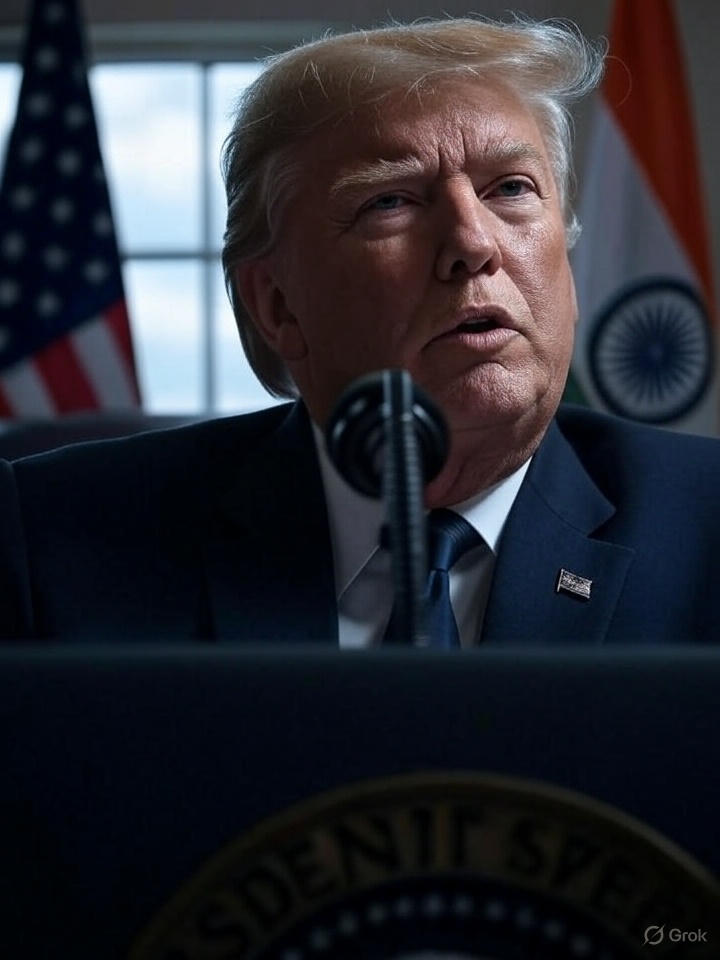
As of August 30, 2025, a wave of unconfirmed rumors about U.S. President Donald Trump’s alleged death has swept across social media, particularly on X, where the hashtag #TrumpIsDead has surged to prominence. The speculation, which lacks any credible backing, has sparked a mix of concern, satire, and skepticism online, highlighting the volatile nature of digital discourse.
The origins of this rumor appear tied to President Trump’s recent low public visibility. At 79, the president has made fewer appearances in recent days, prompting some to question his health. Posts on X have pointed to earlier reports of physical signs—such as bruising on his hand and leg swelling noted in July 2025—as potential indicators of serious issues. The White House previously attributed these to minor conditions, including venous insufficiency and aspirin-related bruising, but the explanations have done little to quell online theories.


Fueling the fire, a misinterpreted statement from Vice President JD Vance in a recent interview with The Washington Post on August 28, 2025, stirred controversy. Vance’s comment about being ready to lead in the event of an unforeseen crisis was seized upon by some as a cryptic hint, despite his explicit praise of Trump’s robust health. This, combined with a viral Reddit thread highlighting Trump’s absence from public events on August 29 and 30, has driven the narrative forward.
The rumor mill isn’t new to Trump. A fabricated claim in 2023, stemming from a hacked X post by Donald Trump Jr., falsely announced the president’s death, only for Trump to swiftly debunk it on Truth Social. More recently, a doctored video falsely claiming The Simpsons predicted his death on April 12, 2025, was dismissed by the show’s creators. These precedents have made some users wary, with many on X labeling the current trend as “déjà vu.”
Despite the buzz, evidence points to Trump’s continued activity. A Truth Social post from the president at 2:15 AM on August 30, 2025, criticized a recent court decision on trade policy, suggesting he remains engaged. The White House has not issued a new statement addressing the rumors, but sources close to the administration call them baseless.
The #TrumpIsDead trend reflects the chaotic interplay of fact and fiction online. While some users share memes or express genuine worry, others use the moment to critique Trump’s policies or speculate further. This episode serves as a stark reminder of the need for discernment in navigating viral claims, especially in an era where misinformation spreads faster than truth.
The Viral Vortex: How Social Media Fuels False Narratives About Trump’s Health in 2025
As of August 30, 2025, a storm of unverified claims about U.S. President Donald Trump’s death has erupted on social media, with #TrumpIsDead trending across X. These baseless rumors, sparked by the president’s temporary absence from the public eye and amplified by speculation about his health, reveal the chaotic power of social media to shape narratives and distort reality. This phenomenon offers a lens into the broader impact of digital platforms on public perception, political discourse, and trust in information.
The Mechanics of Social Media’s Rumor Engine
- Instant Amplification Through Virality
Social media’s lightning-fast spread of information turns whispers into wildfires. The #TrumpIsDead hashtag gained momentum after a flurry of X posts noted Trump’s lack of public appearances since August 28, 2025, alongside a brief White House social media glitch that same day. A single viral post on X, claiming “Trump hasn’t been seen in 48 hours,” garnered thousands of reposts, fueled by algorithms prioritizing engagement. This mirrors findings from the 2025 Digital News Report, which notes that 54% of Americans now rely on social media for news, often bypassing traditional outlets. - Polarization and Narrative Silos
Platforms like X foster polarized echo chambers, where users’ biases shape the content they see. Pro-Trump accounts like @TrumpWarRoom dismissed health concerns as “leftist hoaxes,” while critics, such as @OccupyDemocrats, shared zoomed-in images of Trump’s bruised hands or swollen legs, suggesting serious illness. This divide, deepened since X’s user base skewed conservative post-2022, creates dueling realities. A July 2025 Morning Consult poll showed 46% of voters question Trump’s fitness due to age, with Independents increasingly skeptical, illustrating how rumors exploit existing divides. - Misreading the Mundane
Social media thrives on interpreting ambiguity as conspiracy. A Washington Examiner interview with Vice President JD Vance on August 26, 2025, where he affirmed readiness for any “unexpected crisis,” was twisted by some X users into a hint of Trump’s demise. Similarly, photos of Trump’s bruising—explained by the White House as aspirin-related—and a slightly uneven gait fueled wild theories of heart disease or hidden medical devices. These misinterpretations, shared without context, spread faster than clarifications. - The Role of Influencers and Automation
High-profile accounts and bots supercharge rumors. Posts from figures like @krassenstein, speculating about Trump’s health based on a limp, reached millions. Meanwhile, automated accounts, a tactic seen in past misinformation campaigns globally, likely boosted #TrumpIsDead’s visibility. The 2023 hack of Donald Trump Jr.’s X account, falsely announcing Trump’s death, shows how single posts can destabilize narratives, a pattern repeating in 2025.
The Ripple Effects on Society and Politics
- Undermining Institutional Credibility
Unverified rumors erode trust in official sources. Despite Trump’s active Truth Social post at 1:47 AM on August 30, 2025, railing against a recent court ruling on tariffs, many X users dismissed it as “staged.” The 2025 Edelman Trust Barometer reports declining confidence in government and media, with social media often outpacing both as a news source. When White House statements or Trump’s own posts are met with skepticism, the cycle of distrust deepens. - Deepening Political Fault Lines
Health rumors about Trump, now 79, intensify partisan divides. Supporters view them as attacks, while opponents use them to question his leadership. A Reuters/Ipsos poll from August 2025 found 51% of Democrats believe Trump’s age impacts his capability, compared to just 22% of Republicans. Social media amplifies these sentiments, with hashtags like #TrumpHealthWatch fueling debates that drown out policy discussions. - Potential for Real-World Fallout
False claims can ripple beyond the digital realm. The 2023 Trump Jr. hack briefly spooked markets, and similar rumors in 2025 could sway voter sentiment or campaign dynamics, especially with midterm elections looming. The Lancet notes that Trump’s past dismissal of scientific evidence, like during the COVID-19 crisis, sets a precedent for public skepticism, which health rumors exacerbate. - Normalizing Invasive Speculation
Social media’s fixation on Trump’s physical signs—bruises, a limp, or slurred speech—has led to rampant “diagnoses” by non-experts. Posts on X speculated about everything from dementia to kidney failure, despite medical experts like Dr developments in AI, data science, or related fields, ensuring that the content remains fresh and distinct from previous versions.







Leave a Reply