
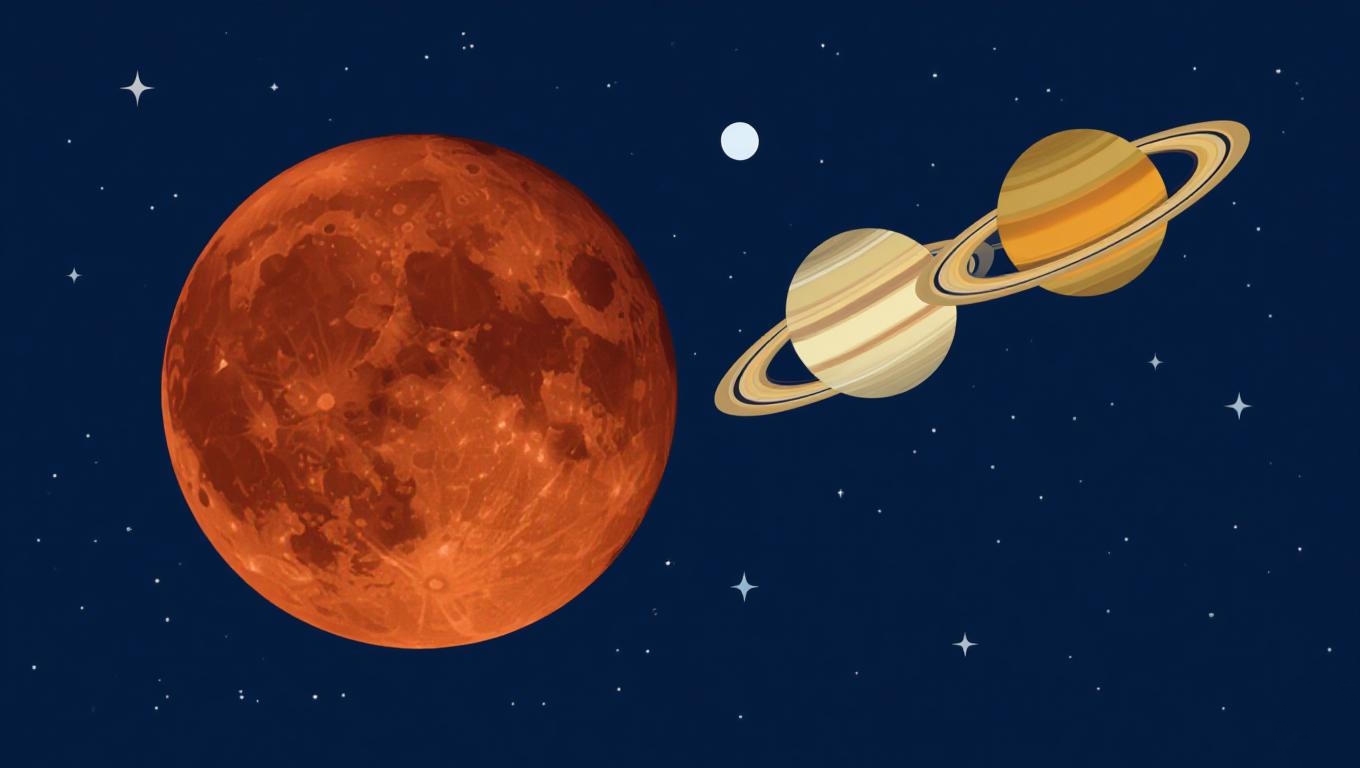
On the night of September 7-8, 2025, the cosmos will stage a dazzling performance as a total lunar eclipse paints the Moon a vivid scarlet, earning its evocative nickname, the Blood Moon. This celestial marvel, visible across vast regions including Asia, Australia, Africa, Europe, and parts of the Middle East, promises to captivate skywatchers with its ethereal beauty. Let’s dive into the details of this extraordinary event, exploring its timing, science, and tips for experiencing its magic firsthand.
Timing and Global Visibility
The lunar eclipse will unfold over several hours, transforming the night sky into a canvas of cosmic wonder. The event begins with the penumbral phase at 15:28 UTC on September 7, when the Moon grazes Earth’s faint outer shadow. By 16:27 UTC, the partial eclipse takes hold, and from 17:30 to 18:52 UTC, the Moon will be fully immersed in Earth’s umbra, glowing red for a generous 82 minutes. The spectacle wraps up at 20:55 UTC as the Moon exits the shadow.

For those in Asia, western Australia, and eastern Africa, the eclipse will be a front-row show, with the Moon high overhead during totality. In India, for instance, the event peaks around 11:42 PM IST, offering a prime viewing opportunity in cities like Kolkata, Chennai, and Jaipur. Europe and the Middle East will catch significant portions, though the Moon’s position near the horizon may affect visibility in some areas. Eastern Australia and New Zealand will see partial phases, while the Americas will largely miss out, as the eclipse occurs during daylight hours. However, skywatchers in Hawaii, parts of Alaska, and a sliver of Brazil might glimpse the Moon’s shadowed edge at moonrise or moonset.
The Science Behind the Scarlet Glow
A total lunar eclipse happens when Earth aligns perfectly between the Sun and Moon, casting a shadow that cloaks the lunar surface. During totality, the Moon dives into the umbra, Earth’s darkest shadow, creating a striking visual effect. Unlike solar eclipses, which demand protective eyewear, lunar eclipses are safe to observe with the naked eye, making them a perfect event for all ages.
The Blood Moon’s fiery hue is a result of Earth’s atmosphere acting like a cosmic filter. As sunlight passes through our planet’s atmosphere, shorter blue and violet wavelengths scatter, while red and orange wavelengths bend around Earth to bathe the Moon in a warm glow. This process, known as Rayleigh scattering, can vary in intensity depending on atmospheric conditions—volcanic ash or pollution might deepen the red, making each eclipse a unique masterpiece.
A Celestial Milestone in 2025
This eclipse is the second lunar event of 2025, following a March 13-14 total eclipse visible in the Americas. It’s part of Saros cycle 128, a series of eclipses recurring every 18 years and 11 days. Adding to its allure, the Moon will be just 2.6 days from perigee, its closest approach to Earth, appearing slightly larger and brighter in the sky. This near-supermoon effect will amplify the drama of the crimson transformation. Later in September, a partial solar eclipse on the 21st will complement this lunar display, marking a vibrant eclipse season.

Tips for an Unforgettable Viewing Experience
No special gear is needed to enjoy a lunar eclipse, but a few tips can elevate your experience. Seek out a dark, open location away from urban light pollution for the clearest view. Binoculars or a small telescope can reveal intricate lunar details, like craters or the shadow’s gradient. Photographers can capture the event with a DSLR or smartphone on a tripod, using a low ISO (200-400) and exposures of 1-3 seconds during totality to freeze the Moon’s red glow. Apps like SkyChart or LunaScope can pinpoint the Moon’s position and highlight nearby celestial gems, such as Saturn, which will shine close to the Moon during the eclipse.
If clouds or location thwart your plans, online streams from sites like AstronomyLive.com will bring the Blood Moon to your screen. Check local weather forecasts and plan ahead to ensure you don’t miss this celestial show.
Echoes of Myth and Wonder
Across cultures, lunar eclipses have sparked awe and storytelling for centuries. In ancient India, myths described the demon Rahu swallowing the Moon, while some African traditions saw eclipses as a celestial dance of balance. Today, these events continue to inspire, blending science with wonder. Whether you view it as a cosmic phenomenon or a moment of spiritual reflection, the Blood Moon invites us to pause and connect with the universe.
A Night to Remember
The total lunar eclipse of September 7-8, 2025, is set to be a highlight of the year’s night sky, with its long totality and striking red hue. Whether you’re gazing from a rooftop in Mumbai, a hillside in Sydney, or a village in Kenya, this event offers a chance to witness the universe’s artistry. Grab a blanket, invite friends, and immerse yourself in the glow of the Blood Moon. For precise timings and visibility in your area, check resources like AstronomyLive.com or local observatories. Don’t miss this chance to marvel at the cosmos!





Leave a Reply