
In January, Jeff La Marca acquired a prescription for the favored weight reduction drug Zepbound, however he could not afford the $750 month-to-month price ticket.
Erica S. Lee/KFF Well being Information
conceal caption
toggle caption
Erica S. Lee/KFF Well being Information
In January, Jeff La Marca acquired a prescription for the favored weight reduction drug Zepbound. However he could not afford the $750 month-to-month price ticket.
Then Medicare launched an 18-month pilot program that provides GLP-1 medicines to some enrollees for less than $50 a month. La Marca thought he may lastly have the ability to afford the drug.
“I believed, ‘Thank God, there is a path,'” mentioned La Marca, who lives in Basking Ridge, N.J., and has tried quite a few diets and train regimes.
However the 68-year-old’s celebration was short-lived.
His utility to the pilot program was denied.
La Marca has extreme obstructive sleep apnea, one among a number of diagnoses that exclude sufferers from the Medicare GLP-1 Bridge program’s $50 month-to-month value.
The notification did not say why he was rejected. He thinks that if he did not have that analysis, he would qualify resulting from his weight.
“I am overweight, morbidly overweight, BMI 42. I had quadruple coronary heart bypass surgical procedure. I am in danger for stroke. I am prediabetic. And but I am unable to get it. I am furious,” he mentioned.
A short lived patch for a long-standing hole
About 1 in 5 American adults has taken a GLP-1 remedy, and most of them, together with these with medical insurance, say the medication are troublesome to afford. Federal legislation has lengthy barred Medicare from masking medication prescribed solely for weight reduction, which is why the Medicare GLP-1 Bridge program made an enormous splash when it launched in July.
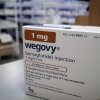
It is a short-term pilot program during which Medicare is providing protection of three GLP-1s for weight reduction and administration, to see whether or not that might save Medicare cash later. Eligible sufferers have to be enrolled in Medicare Half D, a prescription drug protection add-on to Medicare.
Regardless that folks should have Half D insurance coverage to qualify, the preauthorization request would not undergo the insurer; it is as an alternative submitted to a separate system run by a contractor for the Facilities for Medicare & Medicaid Companies.
The pilot contains Wegovy, the KwikPen formulation of Zepbound and the oral remedy Foundayo.
Beneath the pilot, many Medicare beneficiaries with a physique mass index of 35 or greater — the higher vary of weight problems — qualify for protection of a type of medication, if prescribed. These in any other case eligible who’ve a BMI of 27 to 34 can qualify if additionally they have sure well being situations, akin to prediabetes or heart problems.

However buried within the effective print is a distinction that is tripping up sufferers like La Marca: The $50 value beneath Bridge applies solely to folks utilizing the drug solely for weight reduction.
Anybody who has a qualifying medical situation that the Meals and Drug Administration has permitted GLP-1s to deal with, akin to Kind 2 diabetes or reasonable to extreme obstructive sleep apnea, is as an alternative routed again to their Medicare Half D prescription drug plan, which might require copays of a whole bunch of {dollars} a month for GLP-1s.
“The Bridge program was designed to focus on these individuals who cannot get GLP-1 protection via Half D however would profit from taking one for weight reduction,” mentioned Juliette Cubanski, who directs the Program on Medicare Coverage at KFF, a well being data nonprofit that features KFF Well being Information.

Jeff La Marca makes use of a machine to deal with his obstructive sleep apnea. It adjusts his respiratory with each breath.
Erica S. Lee/KFF Well being Information
conceal caption
toggle caption
Erica S. Lee/KFF Well being Information
The associated fee to Medicare of subsidizing the medication will rely largely on how many individuals use this system, and the federal authorities hasn’t launched an estimate.
Cubanski has estimated that 3.8 million folks qualify and that, if 1 / 4 of them enroll in Bridge and stay on therapy for this system’s full 18 months, it can price Medicare about $3.3 billion. If three-quarters enroll, prices may rise to $10 billion.
If the federal government expanded this system to incorporate the extra 5.9 million people who find themselves chubby and already eligible for GLP-1 protection via Medicare Half D, it will add billions of {dollars} extra to this system’s price.
The demonstration’s preliminary weeks have been optimistic, and most prior authorization requests have been accomplished in beneath 12 hours, CMS spokesperson Timothy Foster mentioned.
“This has allowed 1000’s of eligible beneficiaries to entry GLP-1 medicines for weight reduction at pharmacies nationwide,” Foster mentioned.
When GLP-1s aren’t reasonably priced
Sufferers like La Marca are left in a tricky spot, qualifying for Half D protection of a GLP-1 however dealing with a lot greater price sharing.
“‘Protection’ would not at all times imply ‘reasonably priced,'” mentioned main care doctor Taylor Lacy, who describes herself as a “massive proponent” of GLP-1s and practices at Sunflower Medical Group in Roeland Park, Kansas.
The Bridge program is abandoning sufferers with the best medical want, she mentioned.
She famous that many Medicare sufferers already should navigate prior authorization and spend months attempting alternate, typically cheaper therapies, a course of often known as step remedy, earlier than lastly getting approval — solely to reach on the pharmacy counter and uncover that their GLP-1 copays will run them $200 to $600 a month, if no more.

In January, Jeff La Marca acquired a prescription for the favored weight reduction drug Zepbound, however he could not afford the $750 month-to-month price ticket.
Erica S. Lee/KFF Well being Information
conceal caption
toggle caption
Erica S. Lee/KFF Well being Information
Researchers learning how Medicare insurers cowl GLP-1s have discovered that recipients have confronted will increase in out-of-pocket prices and that the majority plans now require prior authorization, which might make getting the medication tougher.
Chris Bond, a spokesperson for insurance coverage trade commerce group AHIP blamed drugmakers’ costs, “which they alone set they usually alone can decrease.”
La Marca’s insurer declined to reply particular questions on La Marca’s case.
Sufferers and prescriptions left ready
For now, La Marca’s GLP-1 prescription stays unfilled. The extreme sleep apnea analysis that helps set up his medical want can also be what excludes him from the low cost program that might convey the fee inside his attain.
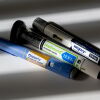
As he mirrored on his appeals and the useless ends, La Marca paused, his eyes filling with tears of frustration.
“That is now my quest, as a result of it is my solely likelihood to enhance my well being,” he mentioned. “It is the one factor left. I’ve tried every part.”
This story comes from NPR’s well being reporting partnership with KFF Well being Information, a nationwide newsroom that produces in-depth journalism about well being points. KFF Well being Information is likely one of the core working packages at KFF — the unbiased supply for well being coverage analysis, polling and journalism.