“There are a number of feelings which might be very straightforward to impress the viewers with. Violence is one in all them, and intercourse is one other.”
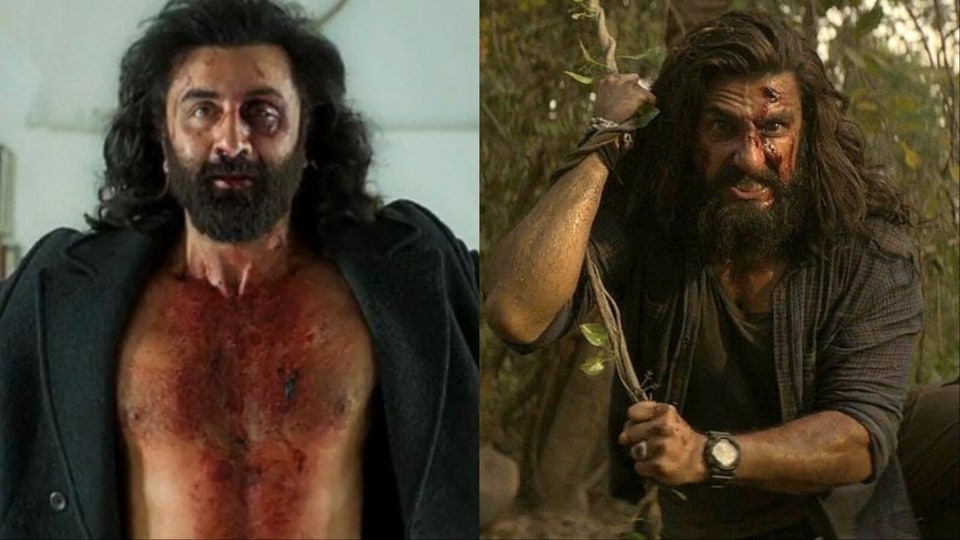
This commentary by Aamir Khan in an previous interview resurfaced on social media when Sandeep Reddy Vanga’s Animal was launched in 2023. Among the many many elements of the movie that sparked debate, its graphic violence grew to become a serious speaking level on-line. Nonetheless, Animal was removed from the one movie to face criticism over its portrayal of violence. Over the previous 5 years, a number of blockbusters throughout movie industries have been known as out on social media for not simply depicting excessive violence but additionally seemingly glorifying it on the massive display. The Dhurandhar duology, which emerged because the highest-grossing Indian movies of 2025 and 2026, is among the many newest and largest examples.
Actual-life circumstances deliver debate round display violence again into focus
Violence in cinema has all the time been a topic of debate, however the two latest troubling real-life situations have as soon as once more introduced the dialog into focus.
In Haryana’s Panchkula, an eight-year-old boy allegedly assaulted a six-year-old woman inside a faculty classroom, repeatedly hitting her with an object that gave the impression to be a brick. In one other disturbing incident in Andhra Pradesh, a 21-year-old allegedly entered a Class 10 classroom carrying a chainsaw and attacked a woman scholar, leaving two injured.
Whereas there isn’t a direct hyperlink between these incidents and what we see in movies, the graphic nature of those circumstances has as soon as once more raised questions on how far filmmakers ought to go when depicting violence on display. As an example, in Dhurandhar, Akshaye Khanna’s character, Rehman Dakait, is seen smashing a person’s face. In Animal, Ranbir Kapoor’s character enters a school classroom carrying a rifle to intimidate college students.
Violence in cinema throughout industries
The talk shouldn’t be restricted to Hindi cinema. When Rajinikanth’s Jailer was launched in 2023, its graphic sequences, together with scenes involving torture and acid, drew criticism from some viewers. Equally, Allu Arjun’s blockbuster Pushpa 2: The Rule, the highest-grossing Indian movie of 2024, drew criticism for its graphic climax sequences, with some viewers discovering the brutality on display exhausting to digest.
Impact of violence on display on children: What do consultants say?
With screens changing into an more and more unavoidable a part of kids’s lives, monitoring the content material they eat has develop into vital. Consultants level out that youthful kids could not all the time have the power to tell apart between fiction and actuality and, therefore, they’ll’t absolutely perceive the implications of imitating what they see on display.
‘Youngsters can admire the best way heroes are rewarded for his or her violent actions’
Dr Subhrajit Parida, advisor, paediatrics and neonatology, Manipal Hospital, Bhubaneswar, explains that kids can imitate the behaviour of characters they admire, notably heroes who are sometimes rewarded for his or her violent actions.
“As kids usually are not in a position to differentiate between fiction and actuality, it’s tough for them to grasp the implications of violent content material on display. At instances, they attempt to imitate superheroes by combating, kicking, boxing, killing and performing many different such acts. In addition they admire the best way superheroes are rewarded for his or her violent actions. Although not each little one behaves this manner, repeated publicity to comparable violent content material can regularly lead kids to soak up such behaviour into their on a regular basis lives,” he mentioned.
‘Repeated publicity to violence could make children much less delicate to others’ ache’
Dr Shivananda Pai, advisor neurology, KMC Hospital, Mangaluru, explains that kids study via commentary and imitation, and repeated publicity to aggression can affect how they understand battle.
“From a mind science perspective, kids study loads by watching and copying what others do. In the event that they see violence used to resolve issues or achieve management, they may begin to assume that aggression is a approach to act. Repeated publicity may make children much less delicate to individuals’s ache and struggling. They could develop into emotionally numb over time,” he mentioned.
‘Repeated publicity to such content material can improve nervousness’
Muskaan Trikha, medical psychologist, Institute of Neurosciences, Medanta, Noida, factors out that the priority shouldn’t be restricted to movies. Edited scenes from motion pictures that flow into as reels and short-form movies may expose kids to graphic content material, generally with out them actively in search of it out.
She mentioned, “Kids at this time have quick access to quick movies. Graphic visuals can expose them to disturbing materials even when they aren’t actively searching for it. Repeated publicity to such content material can improve nervousness and create an exaggerated notion that the world is unsafe.”
Inventive freedom vs social duty: What celebrities say
The talk over display violence has additionally divided the movie business, with a number of celebrities expressing issues about its glorification, whereas others have defended filmmakers’ inventive freedom.
Veteran screenwriter Javed Akhtar had questioned the rising urge for food for violent cinema. Talking on the Ajanta-Ellora Worldwide Movie Pageant in January 2024, he described the violence in some up to date movies as “meaningless violence” and advised that it mirrored a sure frustration amongst audiences.
Equally, in an interview with The Hollywood Reporter India, actor Radhika Apte additionally spoke about how the portrayal of violence as a supply of leisure deeply disturbed her. Expressing concern in regards to the type of content material kids are uncovered to.
Amid the latest debate, Animal director Sandeep Reddy Vanga strongly pushed again in opposition to makes an attempt to hyperlink his movies to real-life violent incidents. Taking to X, he wrote, “When somebody commits a heinous crime, the primary response ought to be empathy and an try to grasp the bigger drawback. Not discovering a handy scapegoat in cinema.”
Filmmaker Ram Gopal Varma and singer-composer Amaal Mallik additionally got here out in help of Sandeep, arguing that cinema alone can’t be held accountable for a person’s actions.
Can cinema’s affect be ignored?
Like every debate, this one has two sides. Nonetheless, what can’t be ignored is cinema’s immense affect in India. As an example, in 2003, when Salman Khan popularised the middle-parted coiffure, many kids adopted the look in actual life. Even at this time, followers collect exterior Shah Rukh Khan’s Mannat on his birthday, recreating his iconic pose.
Whereas the craze surrounding at this time’s stars will not be what it as soon as was, cinema’s capability to affect fashionable tradition, vogue and behavior stays simple. The talk, due to this fact, shouldn’t be essentially about whether or not violence ought to have a spot in cinema, however about its therapy and the way audiences eat it.