Oceans swimmers, kyakers and surfers beware, yearly from November, the nice and cozy water off tropical Australia brings field jellyfish and Irukandji near shore. Right here’s when stinger season runs, the place it applies, what stinger nets and stinger fits do and don’t defend you from, and what to do if somebody is stung.
Stinger season at a look
- When: November to Might in tropical Queensland, although stingers could be within the water all 12 months (Queensland Authorities).
- The place: field jellyfish in shallow tropical water north of Agnes Water; Irukandji north of southern Okay’gari (Fraser Island) (Surf Life Saving Queensland). Additionally WA’s north-west, the place Exmouth’s peak is November to April.
- Safety: swim at patrolled seashores, inside stinger nets, and think about a full-body lycra stinger go well with.
- If stung: name 000, pour vinegar on the sting, and be prepared to begin CPR.

When is stinger season?
The Queensland Authorities offers the marine stinger season as November to Might, and says stingers are current in tropical Queensland waters all 12 months, with the chance increased in season (Qld Authorities). Native councils put stinger nets in for the season; Cassowary Coast Regional Council, south of Cairns, heads its seaside web page “Stinger Season November to Might” (Cassowary Coast). In Western Australia, Parks and Wildlife says field jellyfish and Irukandji round Exmouth are most probably “from November till April” (WA Parks).
The place are field jellyfish and Irukandji discovered?
| Field jellyfish (Chironex fleckeri) | Irukandji (Carukia barnesi) | |
|---|---|---|
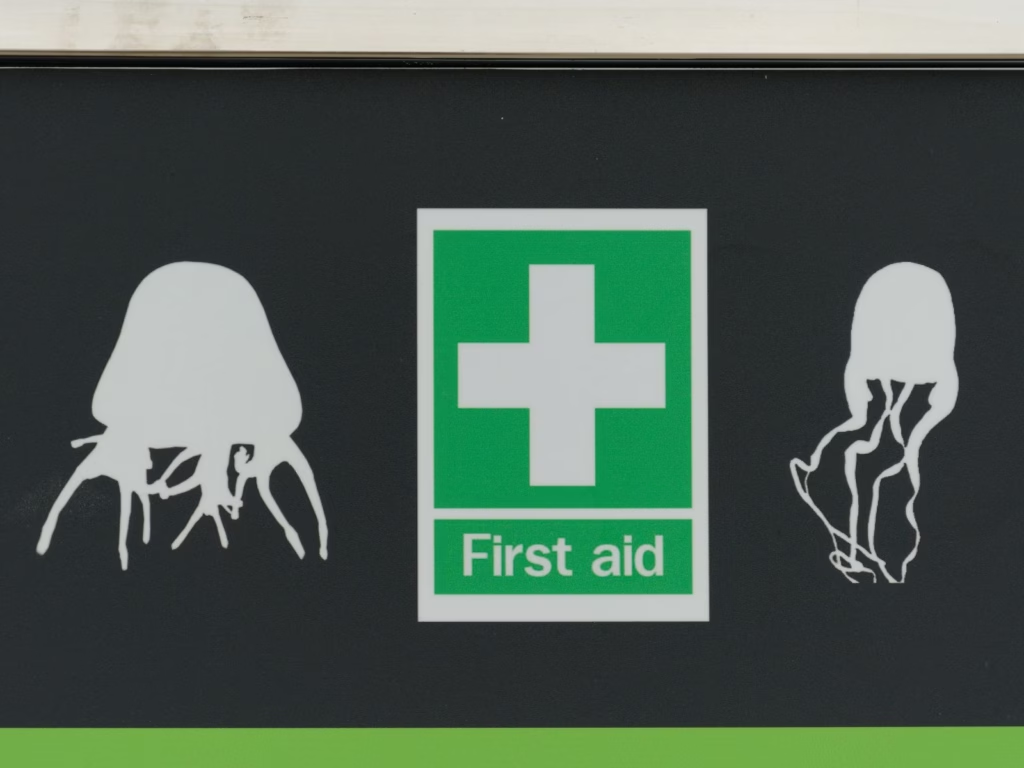
| What it appears like | Giant however nearly clear, with a box-shaped bell as much as 38 cm throughout | Small and clear, 1–2 cm throughout, normally not seen |
| The place (Qld) | Shallow tropical waters north of Agnes Water | Tropical waters north of southern Okay’gari (Fraser Island) |
| Stopped by stinger nets? | Sure, nets defend towards field jellyfish | No, they’re sufficiently small to get by way of |
| Signs | Instant, extreme ache | Can take 20–40 minutes to develop |
Stingers are a danger throughout tropical northern Australia, not simply Queensland. Brisbane and Gold Coast seashores sit south of each ranges given above; there, bluebottles are the extra acquainted sting, they usually’re handled in a different way (see first support under).
Do stinger nets work?
Partly. Cassowary Coast council places it merely: stinger nets “defend towards field jellyfish stings however don’t cease smaller jellyfish like bluebottles and Irukandji” (Cassowary Coast). The nets are nonetheless the most secure place to swim in season, however a internet isn’t a assure, which is why the Queensland Authorities pairs them with patrolled seashores and lycra fits.
Stinger fits: what they’re and whether or not you want one
A stinger go well with is a skinny, full-length lycra or related go well with that covers the arms, legs and physique, typically with a hood and gloves. The Queensland Authorities advises individuals to “think about sporting a full-body lycra go well with to guard towards marine stings” (Qld Authorities), and WA Parks says stinger fits “could defend the components of the physique they cowl” (WA Parks). That final half issues: your face, palms and ft are nonetheless uncovered until you cowl them.
You’re most probably to wish one snorkelling or diving on the reef and across the islands, the place there are not any nets. Many reef excursions provide stinger fits, so examine while you guide.
Stinger go well with vs wetsuit
Tropical water is heat: Cairns averages 24–29°C and Darwin 26–31°C by way of the 12 months, and in {that a} neoprene wetsuit is normally too scorching to put on for lengthy, which is why lycra fits exist. A skinny wetsuit additionally covers pores and skin, however a stinger go well with is the lighter, cooler choice. Neoprene solely begins to make sense under about 24°C.

First support for jellyfish stings
This can be a abstract of Surf Life Saving Queensland’s recommendation (SLSQ). In any critical case, name Triple Zero (000) first and observe lifeguards.
- All stings: get the particular person out of the water if it’s secure, and examine DRSABCD.
- Field jellyfish: pour vinegar on the sting for a minimum of 30 seconds, then decide off any tentacles. Begin CPR instantly if wanted.
- Irukandji: name 000, douse the realm with vinegar, and preserve the particular person out of the water, someplace secure, and watched for 45 minutes.
- Bluebottles and different stings: rinse with seawater and apply warmth for 20 minutes; use chilly packs if warmth doesn’t assist. Get medical assist if signs persist.
Should you’re undecided what stung somebody in tropical water, the Queensland Authorities says to hunt medical support, as a result of Irukandji signs could be delayed.
FAQ
When does stinger season begin?
The Queensland Authorities offers the season as November to Might, so from 1 November. Stingers could be in tropical waters all 12 months.
Is there stinger season on the Gold Coast or in Brisbane?
Field jellyfish and Irukandji are discovered north of Agnes Water and southern Okay’gari respectively, each nicely north of the Gold Coast and Brisbane. Bluebottles are widespread within the south east.
Do stinger fits defend towards Irukandji?
They defend the pores and skin they cowl. WA Parks says stinger fits “could defend the components of the physique they cowl”, so uncovered palms, ft and face can nonetheless be stung.
Must you put vinegar on a bluebottle sting?
No. Surf Life Saving Queensland’s recommendation for bluebottles is to rinse with seawater and apply warmth for 20 minutes. Vinegar is for field jellyfish and Irukandji.